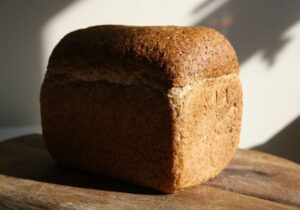

Make your loaves stand out
There’s something magical about pulling a perfectly baked loaf of bread from the oven. That crackly golden crust, the beautiful patterns etched across the surface. It’s a true labour of love. But did you know that bread scoring is about more than just looks?
But for a working bakery or café, bread scoring is about far more than looks. Done well, it’s a quiet driver of reliability, presentation and sales.
For bakers and café owners who bake fresh with Suprima’s dough, mastering the art of how to score bread can lift your products from great to truly artisan.
Read on for some tips on how to master the art of bread scoring, and how to fix the scoring problems that cost you saleable units.
Why is bread scoring important?
Bread scoring plays an important role in how your bread bakes and finishes. This is especially important if you display your baked goods for customers to view. Here are several reasons why scoring your bread just before baking is important.
The score marks guide expansion
Scoring directs where steam escapes during baking, helping you control the final shape. Without proper scoring, your bread may split or bulge in unexpected places during baking, affecting its appearance and structure.
Enhances crust texture
Good scoring leads to that satisfying, crunchy crust customers love.
Adds artisan appeal
Decorative bread scoring makes your loaves Instagram-worthy and irresistible.
It sells the product
We genuinely do eat first with our eyes. A well-scored loaf in the cabinet or photographed for your socials signals craft and justifies an artisan price point. Scoring is one of the lowest-cost, highest-visibility upgrades available to your bakery.
When do you score bread?

Before baking? During baking?
You score bread right after the final proof, just before it goes into the oven.
At this stage, the dough has risen and is airy but still stable enough to hold its shape. Scoring it at this moment lets you control how and where the bread will expand as it bakes.
If you score too early (before proofing), the cuts can close up as the dough rises.
If you wait too long or the dough is over-proofed, the bread might collapse when you slash it.
Here’s how to score bread like a pro
Scoring bread is simple once you know the basics. Here’s a quick guide.
Use the right tool
A razor-sharp serrated blade or baker’s lame is ideal for clean cuts.
Score at the right time
Make your cuts just before the bread goes into the oven, once it’s proofed and ready.
Hold your blade at an angle
A 30–45 degree angle helps create beautiful ‘ears’. Those little ridges that lift and crisp up during baking.
Move with confidence
Swift, decisive movements create cleaner lines and better results.
Practice a few simple cuts first. As your confidence grows, you can move into more decorative bread scoring techniques.
Here’s 8 easy bread scoring patterns to try
Looking for inspiration? Here are a few bread scoring patterns perfect for bakeries and cafés.
1. Single slash

A clean, bold cut down the middle – great for rustic loaves.
2. Cross or X pattern

Perfect for round boules, helping them expand evenly.
3. Wheat sheaf pattern

Small diagonal cuts layered to look like a wheat stalk. A stunning effect that customers love.
4. Leaf or fern design

Multiple slanted cuts branching off a centre line. It’s elegant and shows off your artisan touch.
5. Checkerboard

Small square cuts for a bold, textured surface. Decorative bread scoring adds charm and character to every loaf, making them even more appealing to customers browsing your shelves or café counter.
6. Chevron / wheat-on-batard
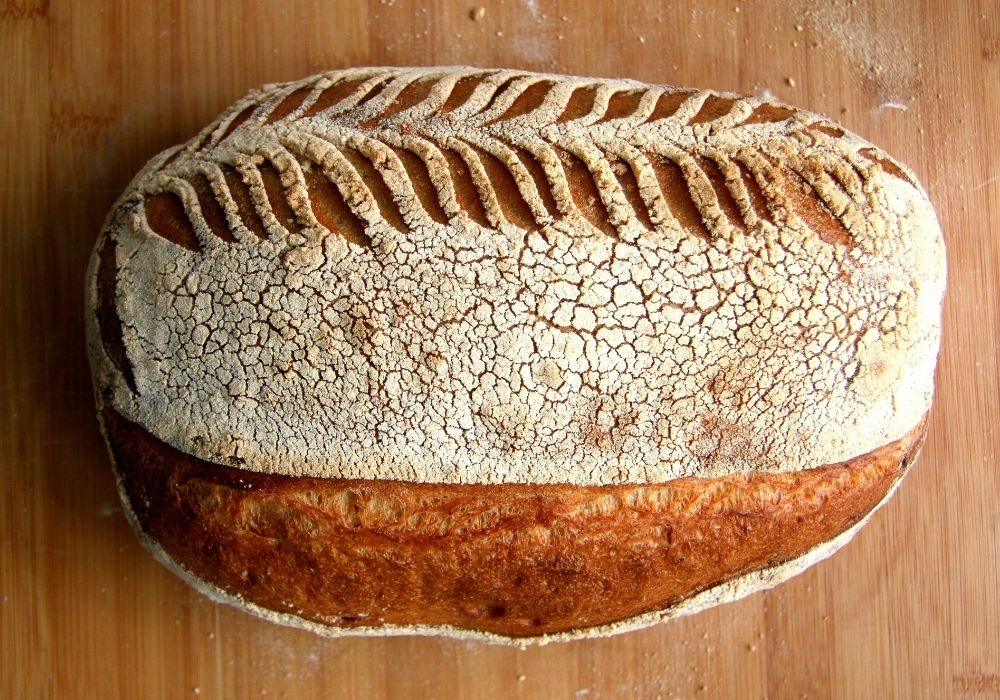
Repeating diagonal cuts along a batard for a rhythmic, professional look that still scores fast enough for moderate volume.
7. Crosshatch / diamond
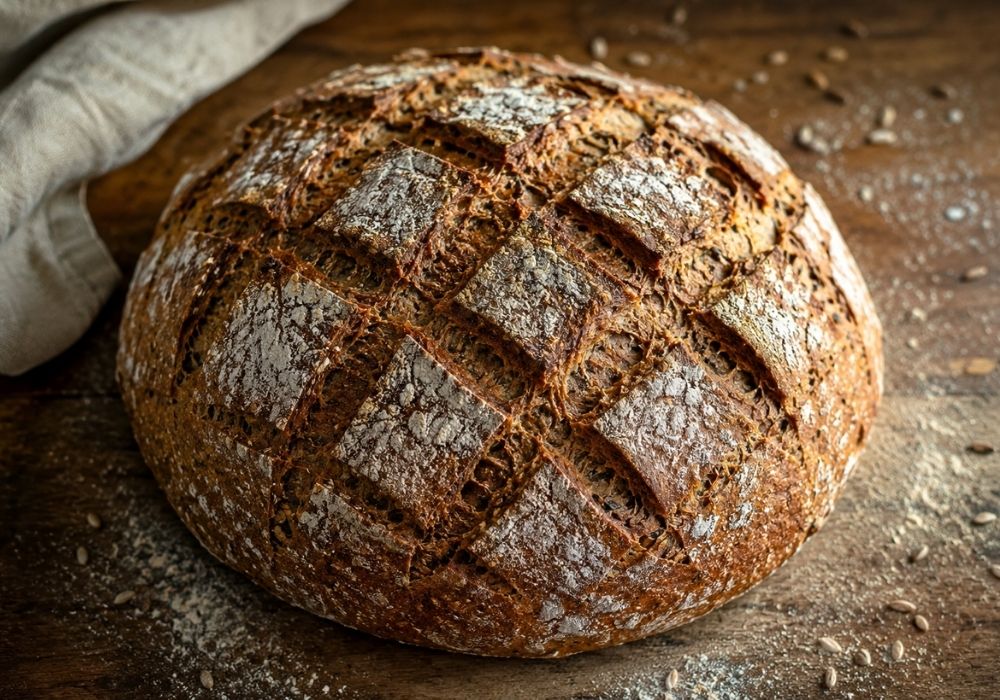
A grid of shallow cuts for a bold, textured surface. Works beautifully on seeded and rye loaves where the texture catches flour and crust contrast.
8. Square / box top
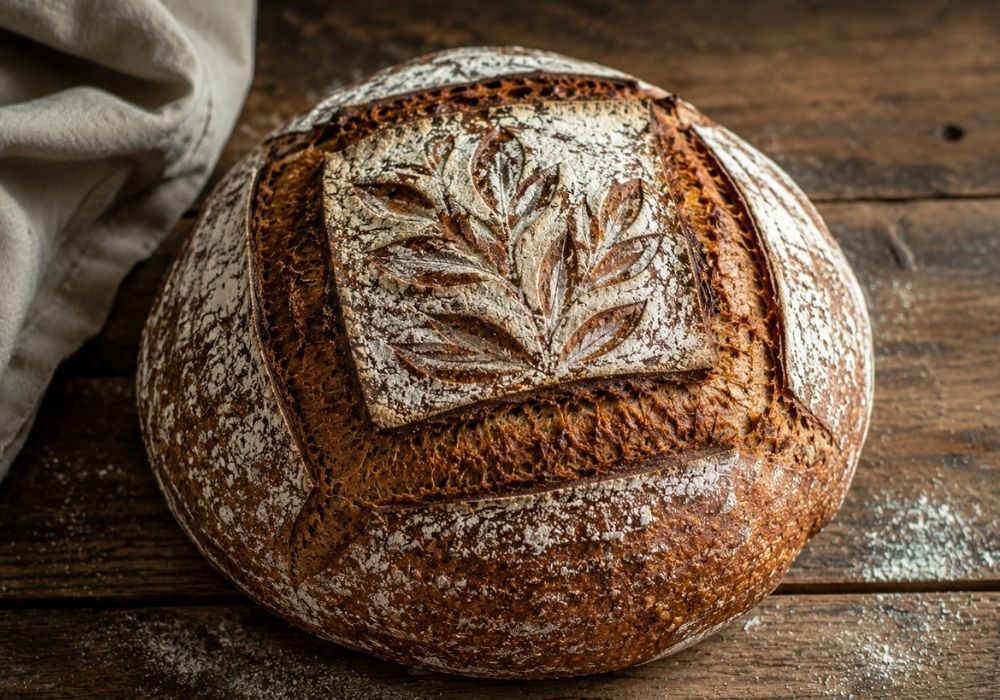
A scored perimeter “box” with a decorative motif inside. A signature-loaf technique for bakeries wanting a recognisable house style.
What about the difference between scoring crusty breads like sourdough versus softer breads?
This is a good point to take note of as the approach changes with the loaf.
Scoring crusty breads like artisan breads or Vienna, helps to create beautiful, rustic designs they are famous for.
To score, make deep, confident cuts around 0.5 to 1 cm deep, using a sharp blade at a slight angle. Scoring at an angle (not straight down) helps create those signature, crunchy folds.
For softer breads like sandwich loaves, rolls, or enriched doughs, scoring is more for shaping and gentle guidance rather than dramatic visual effect.
Note: if you are baking bread in a tin, they don’t need to be scored.
Soft breads usually only need a single, shallow slash
Use a lighter, shallower cut, often straight down rather than angled.
The result, once baked, is a smooth, even surface, with a slight decorative effect, but the focus is on a soft, tender crust.
In short:
- Crusty breads = bold, angled cuts for drama and crunch.
- Soft breads = gentle, shallow cuts for a neat shape.
Troubleshooting: Why Your Score Isn’t Behaving
What happened when:
The score closed up during baking?
Usually a proofing or timing issue. The dough was likely over-proofed (no spring left to open the cut) or scored too far in advance and left to sit. Score just before loading, and pull the dough slightly earlier in the final proof.
The loaf blew out the side or bottom instead of the score?
The score was too shallow to become the path of least resistance, so the dough found its own weak spot. Cut a touch deeper on your main feature slash (0.5–1 cm), and check your shaping. A poorly sealed seam becomes an unplanned blow-out point.
No ear formed?
Almost always blade angle. A straight-down (90°) cut opens flat. Drop to 30–45° so the blade slices under a flap that can lift. A dull blade also prevents a clean flap so keep blades sharp.
I have ragged, dragging cuts?
A dull or dirty blade, or hesitant strokes. Use a fresh, sharp blade and commit to a single confident motion. Lightly flouring or wetting the blade can help on stickier doughs.
“Nine times out of ten, when a baker tells us their scoring ‘isn’t working,’ it’s actually their proof timing. Get the proof right and the score almost takes care of itself.” – Suprima baking team.
Make your bread your signature
Suprima makes it easy for bakers and café owners to bake fresh, premium-quality bread from our versatile frozen doughs. Add your own scoring and creative touches, and you’ve got a product that’s unmistakably yours.
Whether you’re serving crusty Vienna loaves, artisan breads, or hearty multigrain breads, mastering how to score bread will help you create loaves that not only taste incredible but look amazing too.
Bake fresh. Score beautifully. Create something extraordinary with Suprima.